In September 2024, Sam Altman wrote that “it is possible that we will have superintelligence in a few thousand days (!).” He added the exclamation mark himself. Nine months later he went further: “We are past the event horizon; the takeoff has started.” By then the product he is best known for, ChatGPT, had become the fastest-growing consumer app in history, and in September 2026 OpenAI said 1.2 billion people use it every week.
This guide explains Sam Altman’s vision for AI from his own essays and from the public record: who he is, what he means by AGI and superintelligence, the dates he has given, how ChatGPT grew, how his view of risk has changed, the week OpenAI fired him, why he is building giant data centers, and how OpenAI turned from a nonprofit into one of the most valuable companies in the world. Every number has a source, and our opinion is labeled.
Who is Sam Altman?
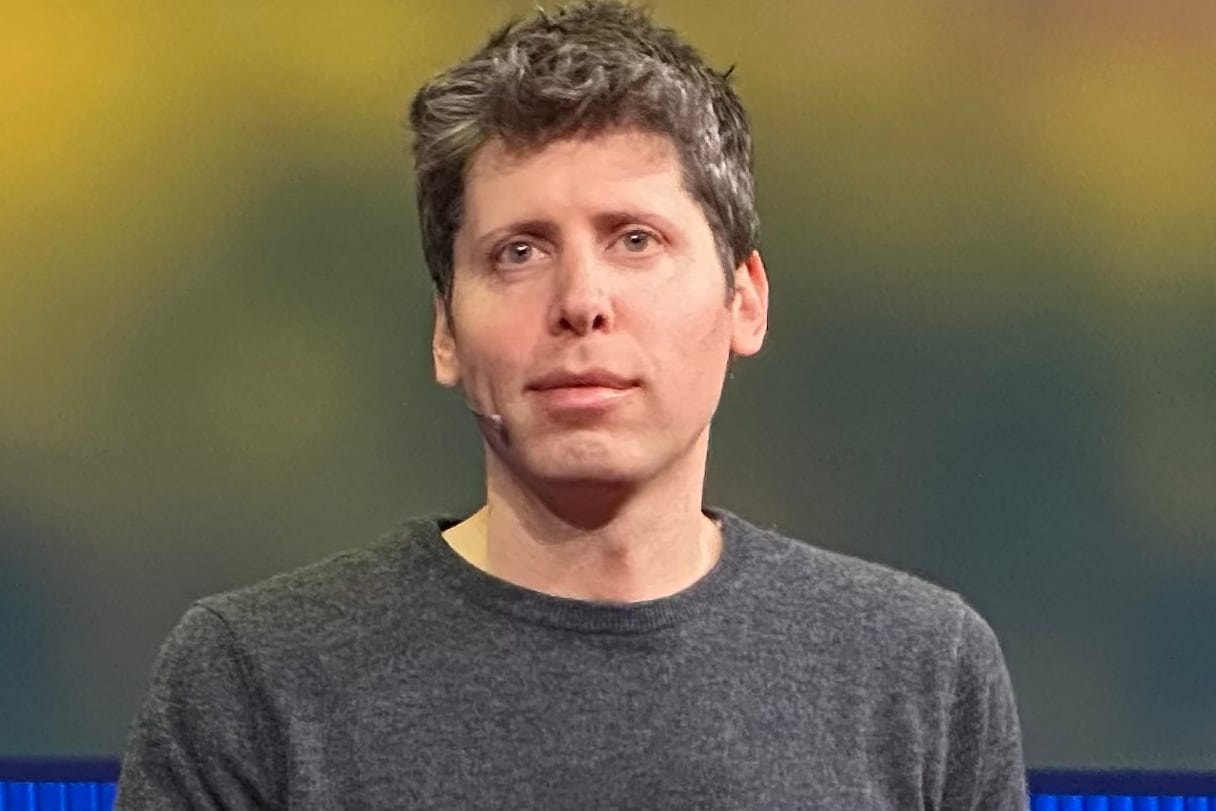
Sam Altman was born in Chicago in 1985 and grew up in the St. Louis area. He studied computer science at Stanford for two years and left in 2005 to co-found Loopt, a location-sharing app that was sold in 2012, according to Wikipedia. He then joined Y Combinator, the startup accelerator, and was its president from 2014 to 2019, a job that put him at the center of Silicon Valley’s startup world. He co-founded OpenAI in 2015 and became its chief executive in 2019.
Altman is not a researcher. His strength is building organizations, raising money and shipping products, and that shapes his vision of AI. Where Dario Amodei writes about risks and research and Elon Musk talks about rockets and power plants, Altman talks about getting useful AI into the hands of as many people as possible, as fast and as cheaply as possible. He also chairs Helion, a company working on nuclear fusion, which fits his belief that cheap energy and cheap intelligence go together.
| Year | What happened |
|---|---|
| 2015 | Altman writes that superhuman machine intelligence is “probably the greatest threat” to humanity, then co-founds OpenAI as a nonprofit |
| 2018 | OpenAI publishes its charter, promising that AGI will benefit all of humanity |
| 2019 | Altman becomes CEO; OpenAI creates a capped-profit company and Microsoft invests $1 billion |
| 2022 | ChatGPT launches on November 30 |
| 2023 | ChatGPT reaches 100 million monthly users in two months; Altman testifies to the U.S. Senate; the board fires him and he returns within days |
| 2024 | He writes that superintelligence may be “a few thousand days” away |
| 2025 | Stargate is announced in January; “The Gentle Singularity” in June; OpenAI becomes a public benefit corporation in October |
| 2026 | ChatGPT reaches 900 million weekly users in February and 1.2 billion by September; a jury rules for OpenAI in Musk’s lawsuit |
What is Sam Altman’s vision of superintelligence?
Altman’s clearest statement of his vision is a short essay from September 2024, The Intelligence Age. Its argument fits in a few sentences. Humanity has always grown more capable by building tools on top of earlier tools. AI is the most powerful tool yet. And the reason it is arriving now can be said in three words: “deep learning worked.” As more computing power and data are applied, the systems keep getting better, and he expects that to continue.
“It is possible that we will have superintelligence in a few thousand days (!); it may take longer, but I’m confident we’ll get there.” Sam Altman, The Intelligence Age, September 2024
A few thousand days is roughly six to ten years, which points to the early 2030s. Altman describes what he expects that world to look like: everyone has a team of virtual experts in every field, children have personal tutors for any subject, health care improves dramatically, and science moves faster. He calls the likely result “massive prosperity.”
It helps to separate two words he uses. AGI, in OpenAI’s founding charter, means “highly autonomous systems that outperform humans at most economically valuable work.” Superintelligence goes further: systems that are far smarter than the smartest humans at almost everything. In January 2025, in an essay called Reflections, Altman wrote: “We are now confident we know how to build AGI as we have traditionally understood it,” and added: “We are beginning to turn our aim beyond that, to superintelligence in the true sense of the word.”
Why does Altman say “we are past the event horizon”?
In June 2025, Altman published The Gentle Singularity, his most confident essay so far. The “singularity” is the idea, popularized by writers such as Vernor Vinge, that technology will one day improve so fast that the future becomes impossible to predict. Altman’s twist is the word “gentle”: he argues that we are already inside this transition, and that from the inside it feels surprisingly normal.
“We are past the event horizon; the takeoff has started.” Sam Altman, The Gentle Singularity, June 2025
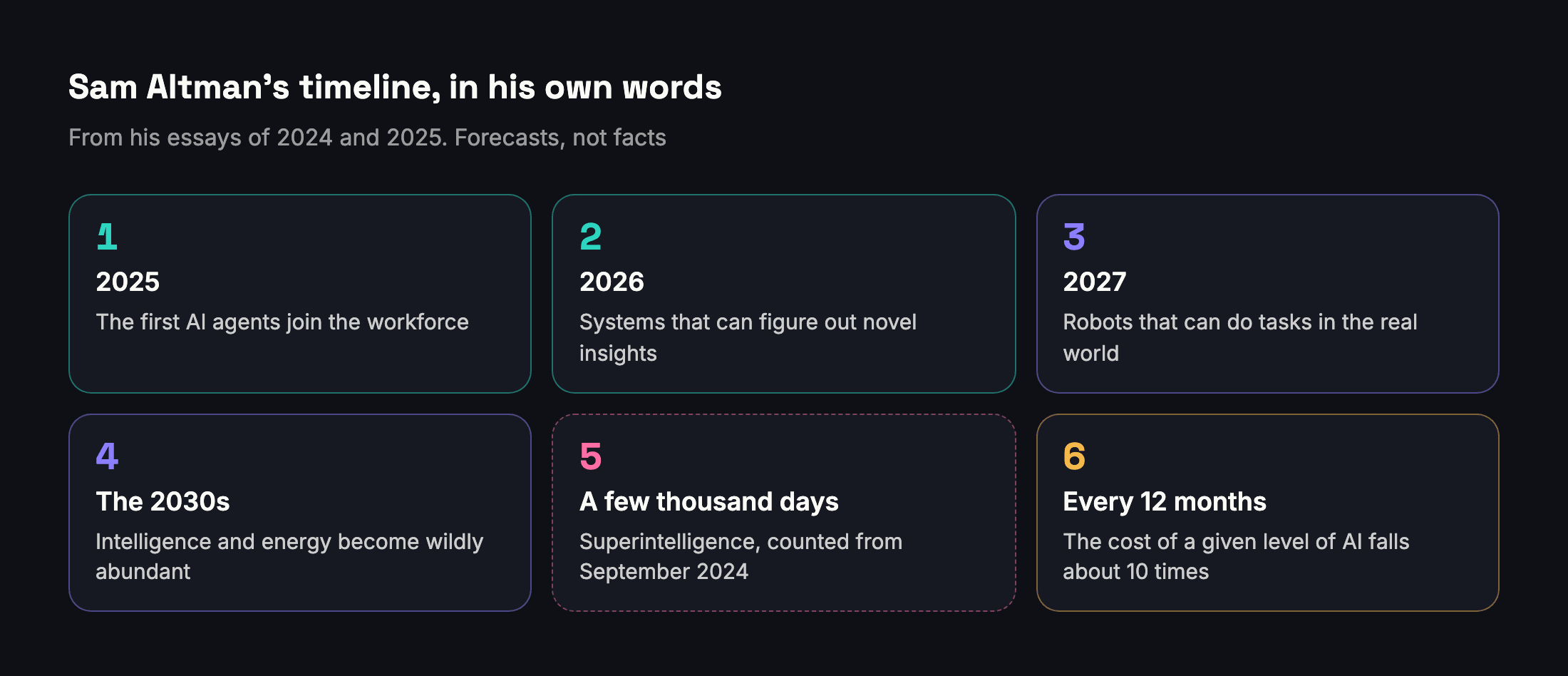
He then gave a specific timeline:
- 2025: “the arrival of agents that can do real cognitive work; writing computer code will never be the same.”
- 2026: “will likely see the arrival of systems that can figure out novel insights.”
- 2027: “may see the arrival of robots that can do tasks in the real world.”
- The 2030s: intelligence and energy, in his words, become “wildly abundant.”
The essay also contains a rare concrete number about AI’s cost to the planet. Altman wrote that the average ChatGPT query “uses about 0.34 watt-hours, about what an oven would use in a little over one second,” and “about 0.000085 gallons of water,” roughly one fifteenth of a teaspoon. His larger point was about where costs are heading: “As datacenter production gets automated, the cost of intelligence should eventually converge to near the cost of electricity.”
How should you read these dates? Agents did arrive in 2025, at least for software: coding assistants that can carry out multi-step tasks became everyday tools for developers. Whether 2026 has produced systems that “figure out novel insights” is debated. AI has helped with real research results, but there is no agreement that machines are now generating important new science on their own. Robots doing useful work in the real world in 2027 remains the boldest of the three claims.
What are Altman’s “Three Observations”?
In February 2025, Altman published Three Observations, a short essay that explains the economics behind his optimism. These three sentences are probably the best summary of how he thinks:
- “The intelligence of an AI model roughly equals the log of the resources used to train and run it.” In other words, each step up in intelligence requires multiplying, not adding, the computing power, data and money you put in.
- “The cost to use a given level of AI falls about 10x every 12 months, and lower prices lead to much more use.”
- “The socioeconomic value of linearly increasing intelligence is super-exponential in nature.” Each step up in intelligence is worth far more than the step before it.
Put together, the three explain his whole strategy. If intelligence costs a lot to create but its price falls tenfold every year, and its value grows faster than its cost, then the rational move is to spend enormous sums on computing power now, because the payoff will be bigger than almost anyone expects. That logic leads directly to Stargate.
The second observation matters most for businesses. If the same level of AI really becomes about ten times cheaper each year, then tasks that are too expensive to automate today may be cheap next year. Altman even floated what he called strange-sounding ideas, such as giving everyone on Earth a “compute budget” so they could use a lot of AI, as a way to share the benefits.
How did ChatGPT become the fastest-growing app in history?
OpenAI released ChatGPT on November 30, 2022, almost as an experiment: a simple chat window on top of one of its language models. It changed the technology industry within weeks.
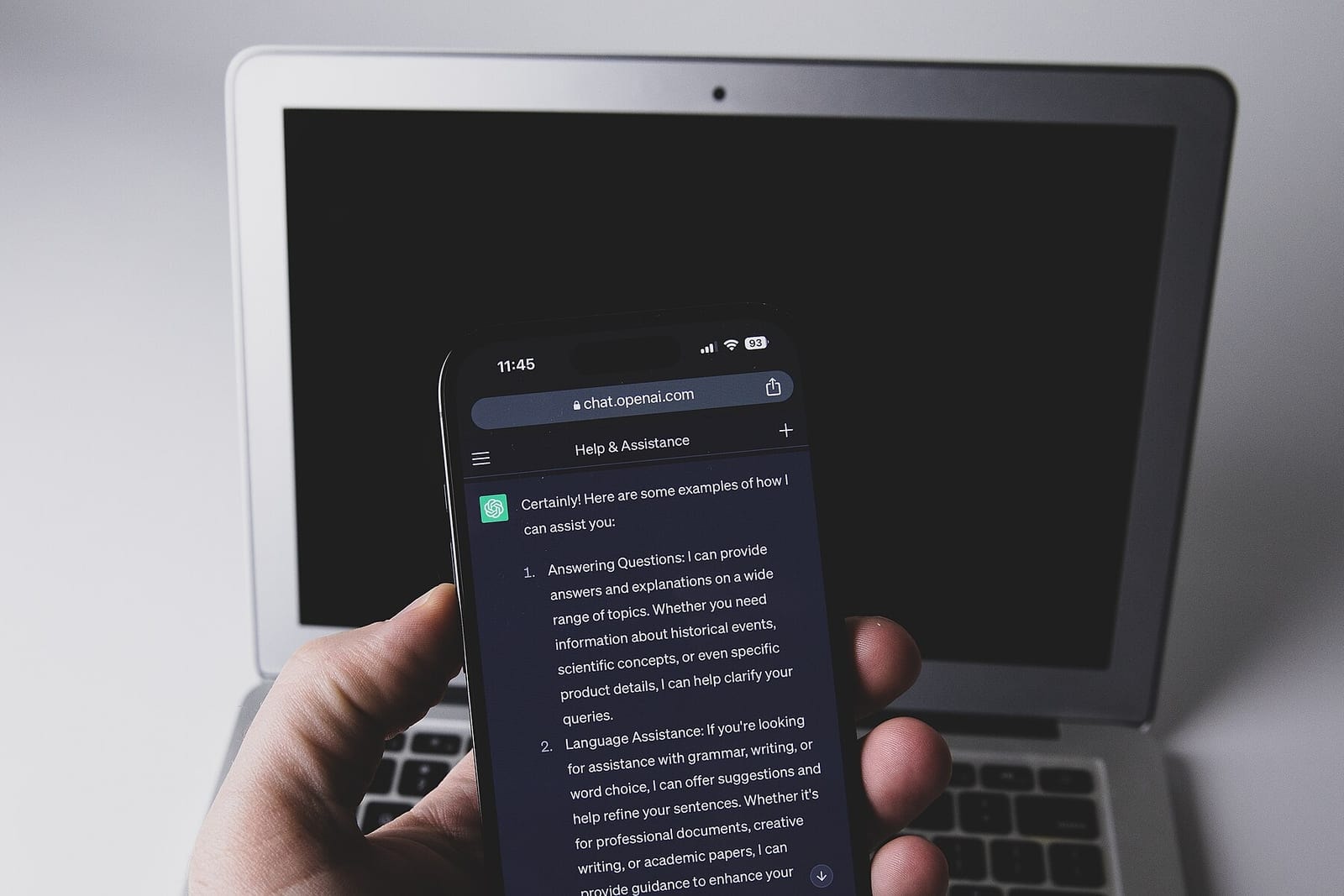
In February 2023, an analysis by UBS reported by Reuters estimated that ChatGPT had reached 100 million monthly active users just two months after launch, which made it the fastest-growing consumer application in history. For comparison, TikTok took about nine months to reach 100 million users and Instagram about two and a half years. The UBS analysts wrote that in 20 years of following the internet they could not recall a faster ramp.
The growth did not stop. In February 2026, OpenAI said ChatGPT had more than 900 million weekly active users and 50 million paying subscribers, and that it had raised $110 billion in private funding, according to TechCrunch. At its developer conference on September 29, 2026, Altman said 1.2 billion people now use ChatGPT every week, and introduced “Dots,” which Engadget described as always-on, proactive agents that can do things like book travel or handle work requests through apps such as Slack.
| Date | ChatGPT milestone |
|---|---|
| November 2022 | Launch |
| January 2023 | About 100 million monthly users, according to UBS |
| February 2026 | More than 900 million weekly users and 50 million paying subscribers |
| September 2026 | 1.2 billion weekly users; Dots agents announced |
The product strategy behind these numbers is Altman’s most distinctive idea. OpenAI calls it iterative deployment: release AI systems early, while they are still limited, let society get used to them, learn from how people use and misuse them, and improve step by step. Critics say this turns the whole world into a test lab. Altman’s answer is that people and institutions need time to adapt, and that a slow, visible rollout is safer than a sudden jump to powerful AI that nobody has seen coming.
The models behind ChatGPT changed just as quickly, and each was put in front of the public within months, which is iterative deployment in practice:
| Date | Model | What changed |
|---|---|---|
| May 2020 | GPT-3 | A large language model that could do many tasks from a few examples |
| November 2022 | ChatGPT | A free chat window that brought AI to the general public |
| March 2023 | GPT-4 | A large jump in reasoning and exam results, and the ability to understand images |
| September 2024 | o1 | OpenAI’s first reasoning model, which works through a problem step by step before answering |
| August 2025 | GPT-5 | One system that decides when to answer quickly and when to think longer |
How has Altman’s view of AI risk changed?
Ten years ago, Altman sounded much like Musk. In February 2015, in a blog post called Machine intelligence, part 1, he wrote:
“Development of superhuman machine intelligence (SMI) is probably the greatest threat to the continued existence of humanity.” Sam Altman, February 2015
He went on to say that other threats, such as an engineered virus, were more likely to happen but less likely to destroy every human. That fear was part of why OpenAI was founded as a nonprofit later that year, with the goal of making sure AGI benefits everyone.
In May 2023, six months after ChatGPT launched, he took that concern to Washington. Testifying before the U.S. Senate Judiciary Committee, he proposed a new government agency that would license the most powerful AI systems and could “take that license away and ensure compliance with safety standards,” as Quartz reported. It was unusual for the head of a technology company to ask to be regulated.
His recent writing is more optimistic and focuses on two problems. The first is alignment: in The Gentle Singularity he says the first step is to “solve the alignment problem,” meaning that AI systems reliably learn and act toward “what we collectively really want over the long-term.” The second is concentration of power. His prescription is to “focus on making superintelligence cheap, widely available, and not too concentrated with any person, company, or country.”
Critics point out the tension. The company that warns most loudly about concentration has become one of the most concentrated players in AI, with hundreds of billions of dollars of computing power and a billion users. Altman’s answer is that wide distribution through cheap products is itself the protection: a technology used by a billion people is harder for any single actor to monopolize than one locked in a lab.
What does Altman expect AI to do to jobs?
Altman is calmer about jobs than Dario Amodei and less radical than Elon Musk. In The Intelligence Age he wrote that “most jobs will change more slowly than most people think,” and reminded readers that “many of the jobs we do today would have looked like trifling wastes of time to people a few hundred years ago.” His argument is historical: technology has always destroyed some jobs and created others that earlier generations could not imagine.
In The Gentle Singularity he was more direct about the pain. “There will be very hard parts like whole classes of jobs going away,” he wrote, “but on the other hand the world will be getting so much richer so quickly” that societies will be able to consider policy ideas they never could before. He also offered an image that captures his outlook:
“A subsistence farmer from a thousand years ago would look at what many of us do and say we have fake jobs.” Sam Altman, The Gentle Singularity, June 2025
His hope is that people a thousand years from now will look at the jobs of the future the same way, while the people doing them find them “incredibly important and satisfying.”
The weak point in this view is speed. Past shifts, such as the move from farms to factories, played out over generations, which gave families time to retrain and move. If AI changes office work within a decade, the transition will be much harder than history suggests, and Altman’s own forecasts point to a decade or less. The “compute budget” idea from his Three Observations is partly an answer to that problem, but it is still an idea, not a policy.
What happened when OpenAI fired Sam Altman?
On November 17, 2023, OpenAI’s board removed Altman as chief executive and from the board, saying he had not been “consistently candid in his communications.” It was one of the most dramatic weeks in technology history. Within days, OpenAI said it had reached an agreement in principle for his return, and he came back with a new board led by Bret Taylor, the former co-chief executive of Salesforce, with the former U.S. Treasury Secretary Larry Summers and Adam D’Angelo, who had been on the board that fired him, according to Fortune.
One of the board members who voted to remove him was Ilya Sutskever, OpenAI’s co-founder and chief scientist and one of the most respected researchers in the field. The following week, Sutskever expressed regret at having taken part, according to his Wikipedia biography. He left OpenAI in May 2024 and the next month co-founded Safe Superintelligence Inc., a company whose first product, he said, “will be the safe superintelligence, and it will not do anything else up until then.” The split showed how seriously some of the people closest to the technology take the idea that safety and speed can pull in different directions.
Altman has written about the episode only briefly. In Reflections he called it “a big failure of governance by well-meaning people, myself included.” The firing mattered beyond the drama: it showed that the nonprofit board meant to keep OpenAI’s mission safe could not, in practice, overrule a chief executive who had the support of the staff and the investors. That lesson shaped the restructuring that followed.
What is Stargate, and why does Altman need so much computing power?
On January 21, 2025, OpenAI and its partners announced the Stargate Project: a new company that intends to invest $500 billion over four years building AI infrastructure for OpenAI in the United States, with $100 billion to be deployed immediately. SoftBank and OpenAI lead it, with SoftBank responsible for the finances and OpenAI for the operations, and SoftBank, OpenAI, Oracle and MGX are the initial equity funders. The first data centers are being built in Abilene, Texas.
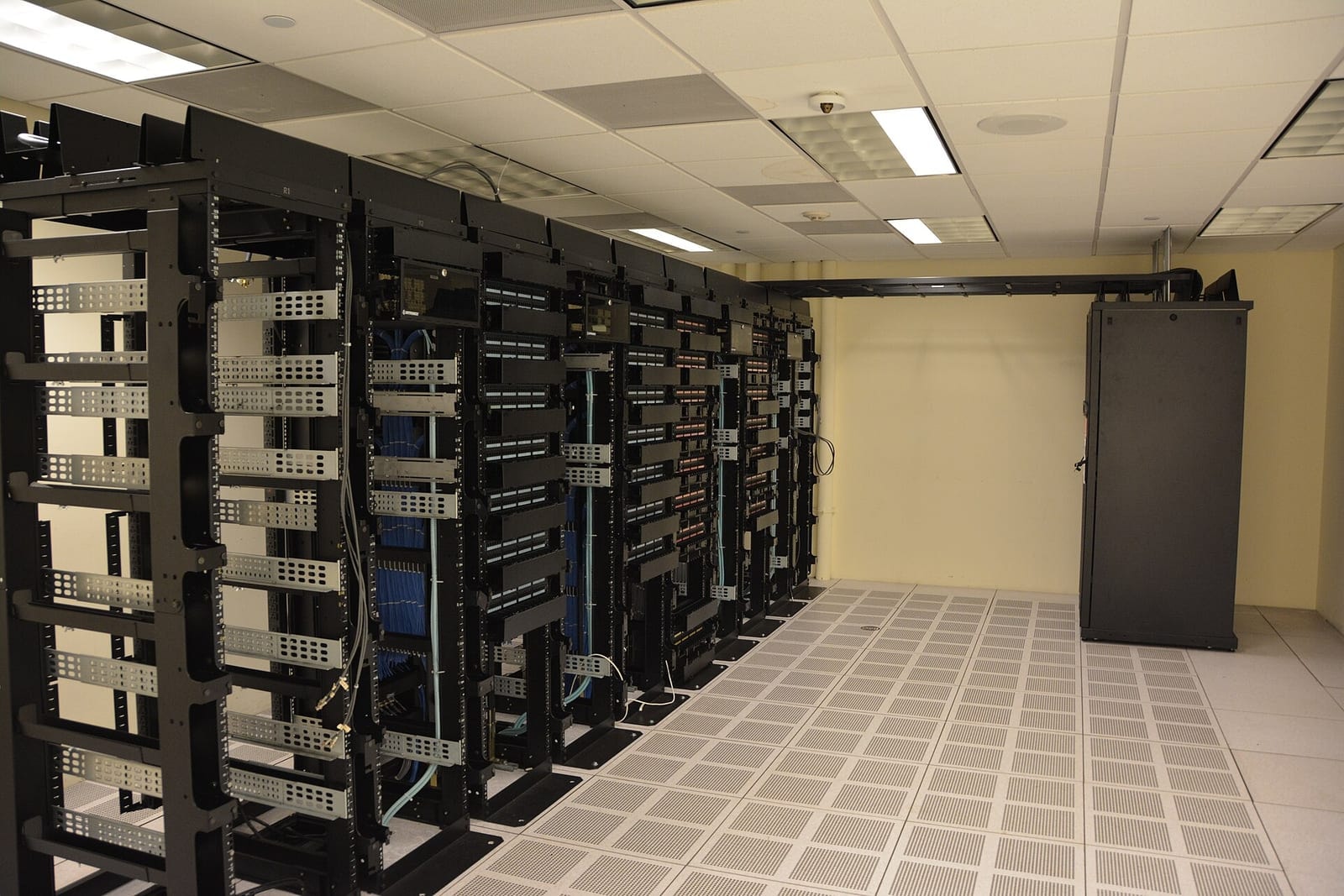
Stargate is the Three Observations turned into concrete and steel. If intelligence grows with the log of resources, you need vast resources for each step. If prices fall tenfold a year, demand will explode, and you need capacity to meet it. And if intelligence eventually costs about as much as electricity, then whoever controls the data centers and the power supply controls the cost of intelligence. Altman, in other words, has reached a conclusion that is not so far from Musk’s: the future of AI is decided by infrastructure.
The scale is hard to picture. $500 billion is more than the yearly economic output of many countries. Whether that money produces superintelligence or ends up, like some of the fiber-optic cable laid in the late 1990s, as overcapacity that later generations use cheaply, is one of the biggest open questions in the economy.
What is OpenAI building in the Gulf?
Altman’s infrastructure plans reach the Middle East directly. In May 2025, G42, OpenAI, Oracle, Nvidia, SoftBank and Cisco announced Stargate UAE, a 1-gigawatt computing cluster in Abu Dhabi, according to SoftBank. It is to be built by G42 and operated by OpenAI and Oracle inside a new 5-gigawatt UAE–U.S. AI Campus, with the first 200 megawatts expected to go live in 2026. Altman called it “the first milestone in our OpenAI for Countries initiative.”
For the region, this matters in three ways. It places some of the world’s most advanced AI computing physically in the Gulf, which can bring faster AI services closer to businesses in the UAE and neighboring countries. It turns energy, which the Gulf has in abundance, into a strategic asset for AI, in line with Altman’s view that the cost of intelligence will move toward the cost of electricity. And it makes the Gulf a builder in the AI race, not only a customer.
For Egyptian businesses the effect is indirect but real. More AI capacity in the region and more Arabic-speaking users give providers stronger reasons to improve their Arabic and their regional pricing, which is good news for any company that serves Arabic-speaking customers.
How did OpenAI change from a nonprofit to a company?
OpenAI began in December 2015 as a nonprofit. When it was announced, TechCrunch reported that Altman and Elon Musk would co-chair it and that its backers had pledged more than $1 billion. Training frontier models soon proved far more expensive than a charity could fund, so in 2019 OpenAI created a “capped-profit” company under the nonprofit, and Microsoft invested $1 billion, according to Wikipedia.
The final step came in October 2025. OpenAI completed a recapitalization in which its business became a public benefit corporation, OpenAI Group PBC, overseen by the nonprofit OpenAI Foundation. According to Microsoft, Microsoft’s stake in OpenAI Group PBC was valued at about $135 billion, or roughly 27 percent. The new agreement says that once OpenAI declares it has reached AGI, that declaration will be verified by an independent expert panel, and it extends Microsoft’s rights to OpenAI’s models and products through 2032.
Elon Musk argued in court that this path betrayed OpenAI’s original promise. In May 2026 a jury found for OpenAI because Musk had brought his case too late, according to Al Jazeera. OpenAI’s position was that it had never promised to remain a nonprofit forever. Musk said he would appeal. We cover his side in our article on Elon Musk and superintelligence.
How does Altman’s vision compare with Musk’s and Amodei’s?
The three leaders agree that very powerful AI is close. What makes Altman different is his theory of how to get there safely:
- Ship early and learn. Altman believes the safest path is gradual, public release, so society can adapt. Musk focuses on building faster than rivals, and Amodei on research and rules before deployment.
- Abundance as the goal. Altman’s essays talk about prosperity, cheap intelligence and a compute budget for everyone. Amodei talks about curing diseases and managing risks, and Musk about understanding the universe.
- Infrastructure as destiny. Like Musk, Altman has concluded that whoever builds the most computing power sets the pace, which is why Stargate exists.
- Spreading power as a safety measure. Altman argues that making AI cheap and widely available protects against concentration. Amodei worries more about misuse once powerful tools are everywhere.
You can read the full stories of Dario Amodei’s vision and Elon Musk’s vision in their own articles.
Is Altman right? Our view
This section is opinion: the view of the Adams Analytics editorial team, based on the record above.
He has been right about the most important thing: demand. Few people in 2022 expected a chat interface to reach more than a billion weekly users within four years. Altman bet that people would find AI useful in their daily lives if it was easy enough to use, and the numbers proved him right.
His cost curve is the most useful idea for businesses. If the same level of AI really keeps getting about ten times cheaper each year, then almost every company should plan for tasks that are too expensive to automate today to become affordable soon. That is a planning assumption, not a promise, but it has held well so far.
His timeline for superintelligence is a forecast, not a fact. “A few thousand days” is a deliberately wide window. The step from very capable assistants to systems that generate major scientific discoveries on their own is the hardest part, and there is no reliable way to predict it.
The governance story is still unfinished. The 2023 firing showed that OpenAI’s original safeguards did not work as designed. The new structure, with an independent panel to verify any AGI declaration, is an improvement on paper. Whether it holds when trillions of dollars are at stake has not been tested.
“Not too concentrated” is the right goal, and the hardest to achieve. The same economics that make AI cheaper also reward the companies that own the most data centers. Watching whether AI stays open and affordable, especially for smaller businesses and smaller countries, is one of the most important things to follow over the next decade.
What Altman’s vision means for businesses and marketers in Egypt and the Gulf
ChatGPT is already part of daily work in Cairo, Riyadh and Dubai, and Altman’s roadmap suggests what comes next:
- Agents will do more of the work. Dots and similar agents point to AI that books, buys, replies and reports on its own. Prepare your processes so an agent can follow them: clear steps, clean data, defined approvals.
- Search is changing. People increasingly ask AI assistants instead of search engines. Clear, well-structured content with direct answers, like the quick answer at the top of this article, is more likely to be cited.
- Costs keep falling. Tasks that are too expensive to automate today, such as personalized replies to every customer or daily reports for every client, may become cheap. Revisit your list of “too expensive” ideas every six months.
- Your data is your advantage. When everyone has the same models, the businesses that win are the ones with good data about their own customers and results.
For advertisers on Facebook and Instagram, the most valuable data is your own campaign history, read correctly. Our Meta ads metrics glossary explains every number, and our guide to comparing two periods shows how to tell real progress from noise. Adams Analytics turns your Meta ad accounts into clear reports in English and Arabic, ready for your clients.
Key takeaways
- Sam Altman co-founded OpenAI in 2015, became its CEO in 2019 and launched ChatGPT in November 2022.
- In 2024 he wrote that superintelligence may arrive in “a few thousand days”; in 2025 he wrote that “the takeoff has started” and forecast agents in 2025, novel insights in 2026 and real-world robots in 2027.
- His Three Observations say intelligence grows with the log of resources, the cost of a given level of AI falls about 10 times a year, and the value of more intelligence grows faster than linearly.
- ChatGPT reached about 100 million monthly users in two months, 900 million weekly users by February 2026 and 1.2 billion weekly users by September 2026.
- In 2015 he called superhuman machine intelligence probably the greatest threat to humanity; today he focuses on alignment and on keeping AI cheap, widely available and not too concentrated.
- OpenAI fired and rehired him in November 2023, announced the $500 billion Stargate project in January 2025, and became a public benefit corporation in October 2025.
- For businesses, the practical message is to plan for falling costs, prepare for agents, and treat your own data as your advantage.
For the longer story, read how technology evolved from 1990 to 2026 and the people who predicted the AI era before it arrived.
Questions
What is Sam Altman’s vision for AI?
Altman believes AI will keep improving and getting cheaper until intelligence is abundant, leading to what he calls massive prosperity. His strategy is to release AI early and widely, starting with ChatGPT, and to build enormous computing capacity so that intelligence becomes almost as cheap as electricity.
When does Sam Altman think superintelligence will arrive?
In September 2024 he wrote that superintelligence is possible “in a few thousand days,” roughly six to ten years, though it may take longer. In June 2025 he forecast agents in 2025, systems that figure out novel insights in 2026 and real-world robots in 2027.
What are Sam Altman’s Three Observations?
First, an AI model’s intelligence roughly equals the log of the resources used to train and run it. Second, the cost of a given level of AI falls about 10 times every 12 months. Third, the socioeconomic value of linearly increasing intelligence is super-exponential.
How many people use ChatGPT?
OpenAI said in February 2026 that ChatGPT had more than 900 million weekly active users and 50 million paying subscribers. At its developer conference in September 2026, Altman said 1.2 billion people use ChatGPT every week.
Why was Sam Altman fired from OpenAI in 2023?
On November 17, 2023, the board said he had not been consistently candid in his communications. He returned within days with a new board. He later called the episode a big failure of governance by well-meaning people, including himself.
What is the Stargate Project?
Stargate is a company announced in January 2025 that intends to invest $500 billion over four years in AI infrastructure for OpenAI in the United States, starting with $100 billion. Its initial equity funders are SoftBank, OpenAI, Oracle and MGX, and its first data centers are in Abilene, Texas.
Is OpenAI still a nonprofit?
Not entirely. Since October 2025 its business has been OpenAI Group PBC, a public benefit corporation overseen by the nonprofit OpenAI Foundation. Microsoft holds about 27 percent, valued at about $135 billion.
What does Altman’s vision mean for marketers?
Expect AI agents to take on more tasks, AI assistants to replace some web searches, and the cost of AI to keep falling. Make your content easy for AI to cite, prepare your processes for agents, and use your own data, such as your ad results, as your advantage.
Sources
- Sam Altman — The Intelligence Age (September 2024)
- Sam Altman — Reflections (January 2025)
- Sam Altman — Three Observations (February 2025)
- Sam Altman — The Gentle Singularity (June 2025)
- Sam Altman — Machine intelligence, part 1 (February 2015)
- Wikipedia — Sam Altman
- Wikipedia — OpenAI
- Wikipedia — Ilya Sutskever
- OpenAI — OpenAI Charter (April 2018)
- TechCrunch — Non-profit OpenAI launches with backing from Elon Musk and Sam Altman (December 2015)
- Reuters via Inquirer — ChatGPT sets record for fastest-growing user base, analyst note (February 2023)
- TechCrunch — ChatGPT reaches 900 million weekly active users (February 2026)
- Engadget — OpenAI DevDay 2026 live blog (September 2026)
- Quartz — OpenAI’s Sam Altman got a warm welcome on Capitol Hill (May 2023)
- Fortune — Sam Altman officially reinstated as OpenAI CEO with a new board (November 2023)
- OpenAI — Announcing the Stargate Project (January 2025)
- SoftBank — Global tech alliance launches Stargate UAE (May 2025)
- Microsoft — The next chapter of the Microsoft–OpenAI partnership (October 2025)
- Al Jazeera — Elon Musk loses lawsuit against OpenAI (May 2026)
Send your next client report in minutes
Adams Analytics connects to your Meta ad accounts and builds branded PDF reports in English or Arabic. Free for 7 days — no credit card.
Start free trialWritten by the Adams Analytics team and checked against Meta’s documentation and our own product. Spotted something out of date? Tell us at support@buildincairo.com.