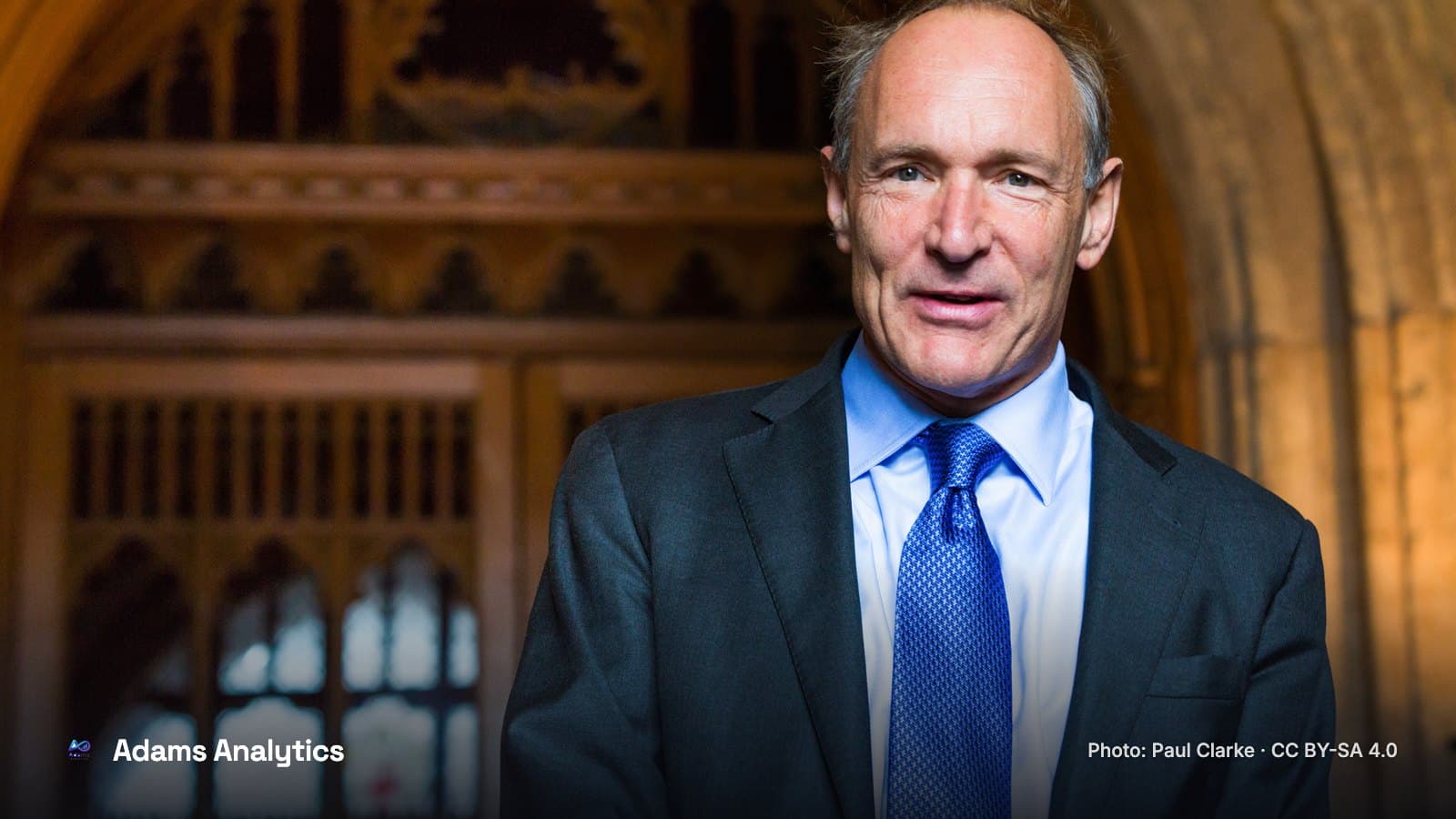
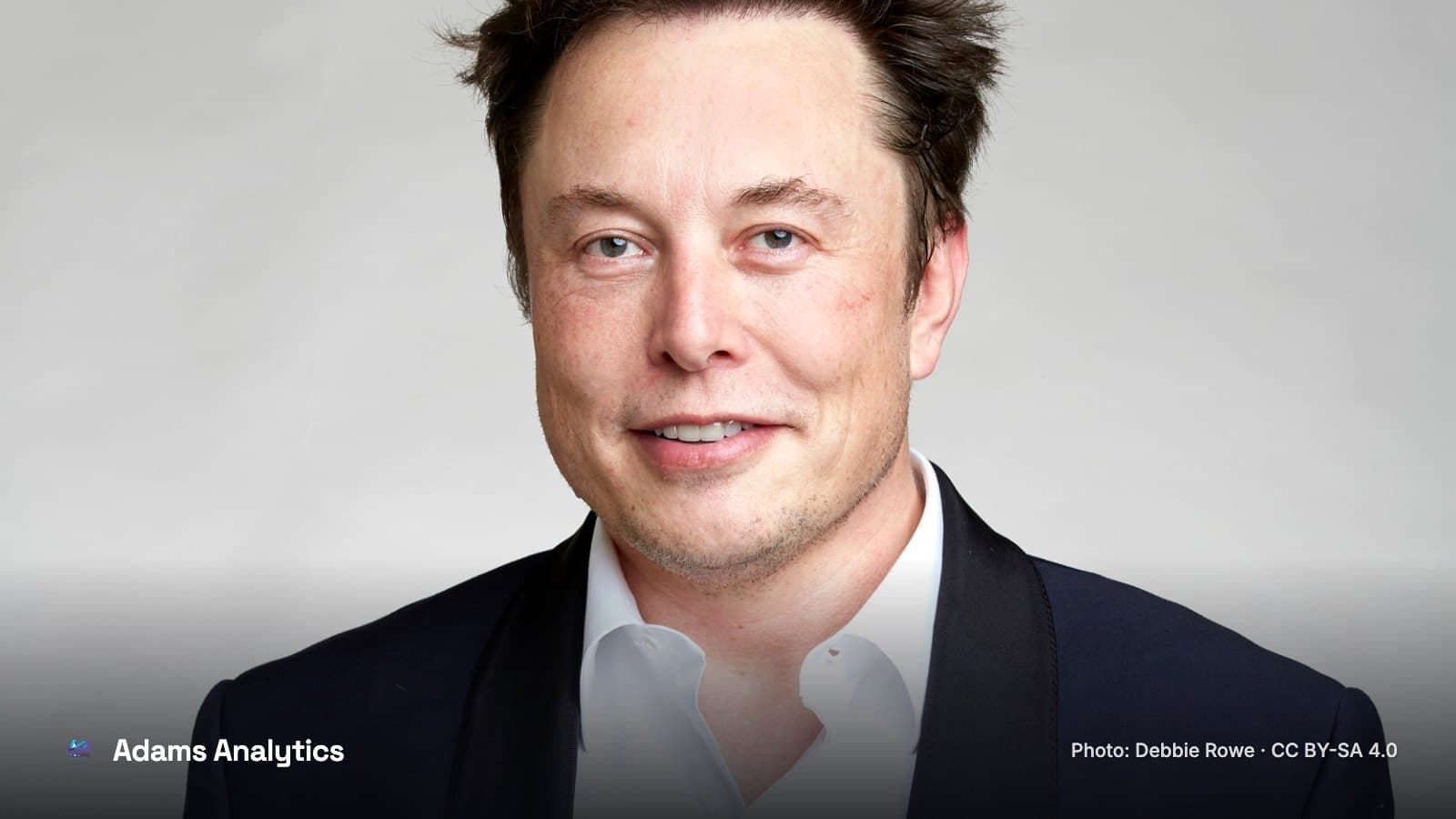
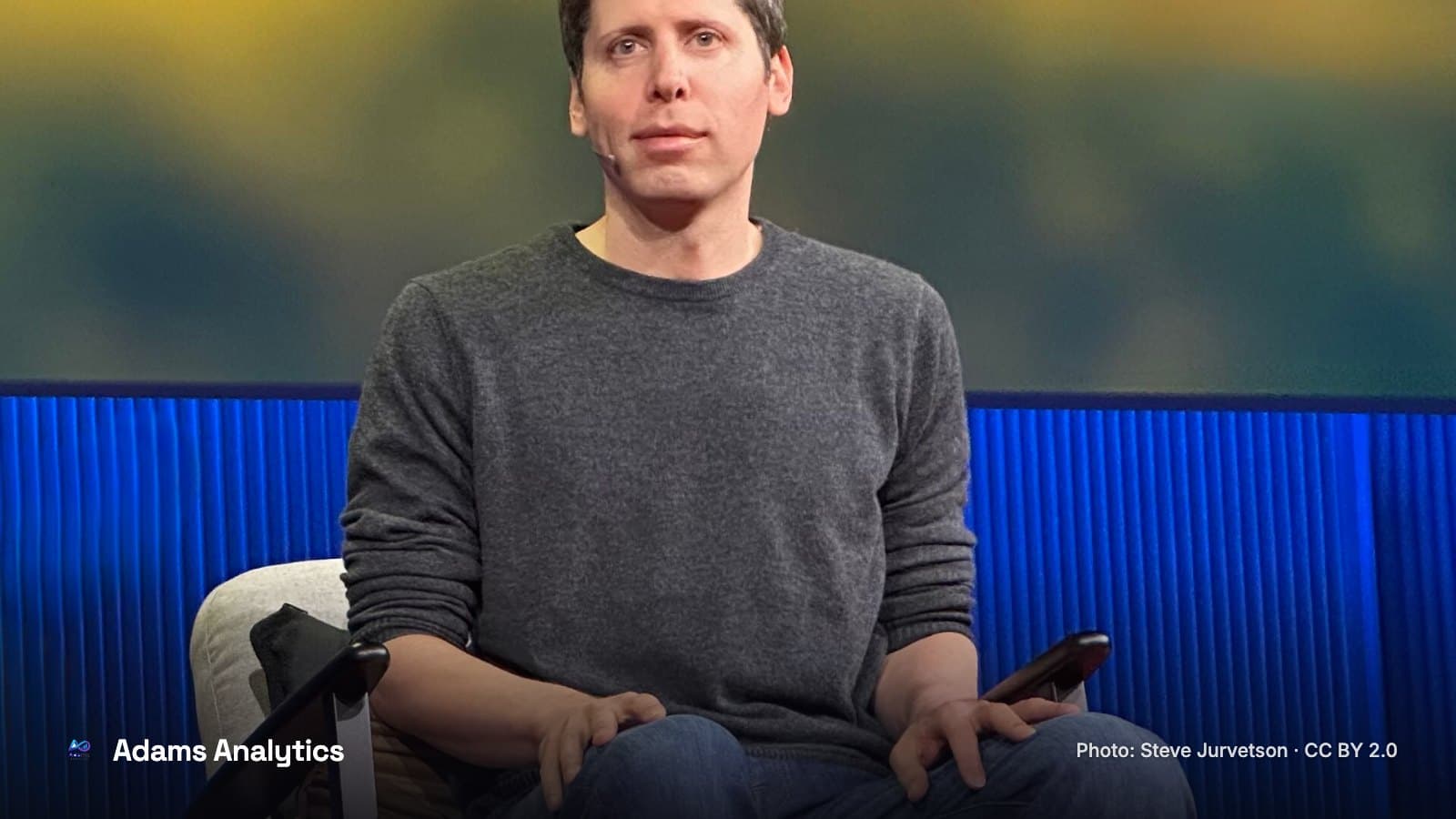
In 1993, a mathematician and science-fiction writer named Vernor Vinge told a NASA-sponsored symposium: “Within thirty years, we will have the technological means to create superhuman intelligence.” Thirty years later, in 2023, ChatGPT was the fastest-growing app in history and the heads of the world’s largest AI labs were testifying to governments about the risks of superhuman AI. Vinge was not alone. A small number of people, some of them more than a century ago, saw this era coming. Very few people believed them.
This guide answers three questions: who predicted the AI era before it arrived, what exactly they said, and how many people believed them. You will meet a Victorian mathematician, an inventor who imagined the smartphone in 1926, the founders of computer science, the science-fiction writers who named the singularity, and the researchers who kept faith in neural networks when almost nobody else did. At the end we score their predictions and explain why the visionaries were so often right about the direction and wrong about the date.
Did anyone predict the AI era before it came?
Many people did, but they predicted different parts of it. Some imagined thinking machines. Some imagined the network that connects everyone, which is what made today’s AI possible. Some imagined the moment when machine intelligence would overtake human intelligence. And some gave dates, which is where most of them went wrong.
It helps to separate three kinds of prediction. Direction predictions say what will happen. Mechanism predictions say how. Date predictions say when. The visionaries in this article were usually good at the first, sometimes good at the second, and usually bad at the third. That pattern, as we will see, is one of the most useful lessons for anyone trying to plan around AI today.
Who first imagined thinking machines?
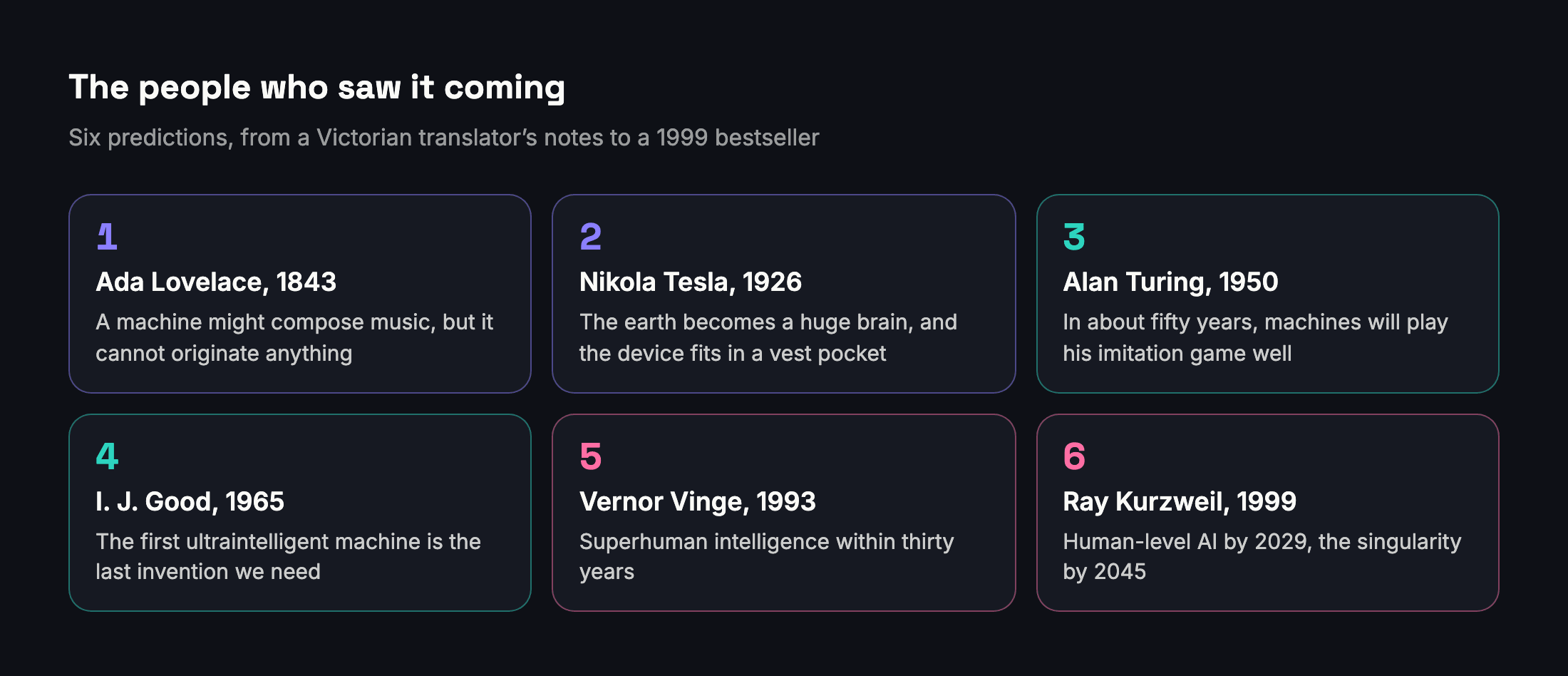
The first person to think seriously about what a general-purpose computer might do was Ada Lovelace, an English mathematician working with Charles Babbage on his never-completed Analytical Engine. In her famous notes of 1843, she saw that the machine could work on more than numbers. If the relationships between musical sounds could be expressed in its terms, she wrote, “the engine might compose elaborate and scientific pieces of music of any degree of complexity or extent,” according to the text of her notes.
She also set a limit that people still argue about. As Alan Turing later quoted her, she wrote that the Analytical Engine “has no pretensions to originate anything. It can do whatever we know how to order it to perform.” Turing called this “Lady Lovelace’s Objection,” and today’s debate about whether AI is truly creative or only recombines what it has seen is the same argument, 180 years later.
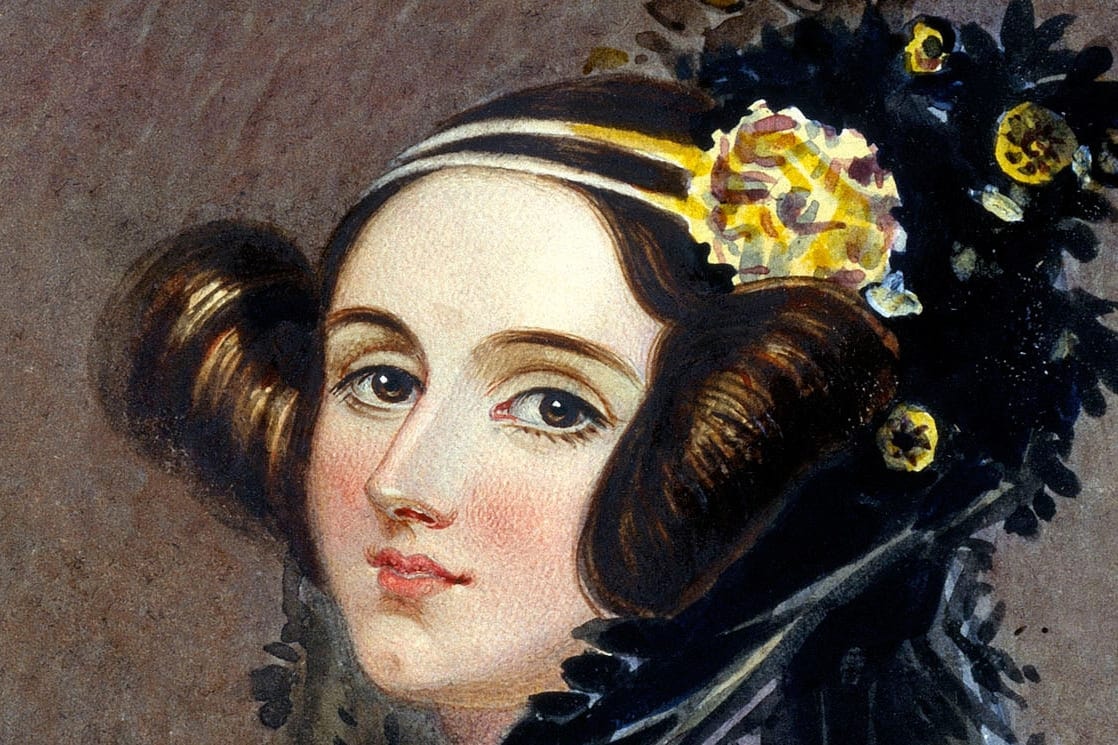
Eighty years after Lovelace, the inventor Nikola Tesla described something remarkably like the connected world of today. In a 1926 interview with Collier’s magazine, he said, as Snopes confirmed:
“When wireless is perfectly applied the whole earth will be converted into a huge brain, which in fact it is, all things being particles of a real and rhythmic whole.” Nikola Tesla, Collier’s, January 1926
He added that the instruments needed for this would be simple, and that “a man will be able to carry one in his vest pocket.” Ninety years later, billions of people carry exactly that.
What did Alan Turing predict?
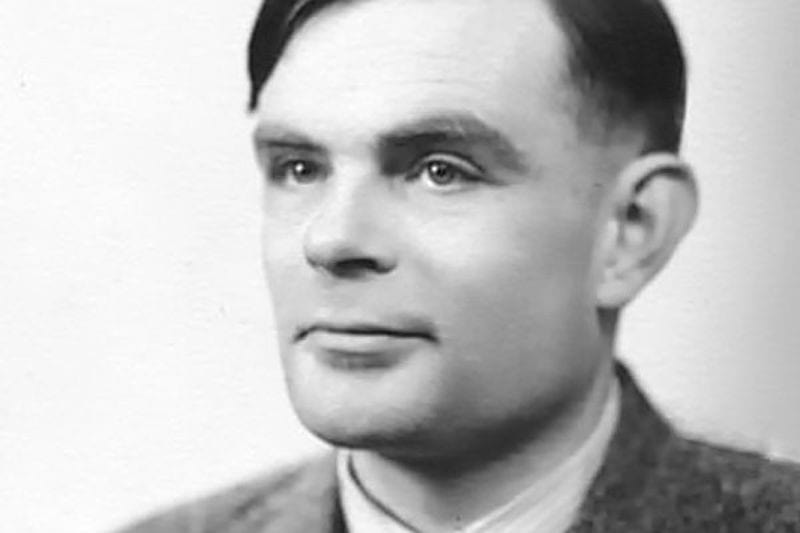
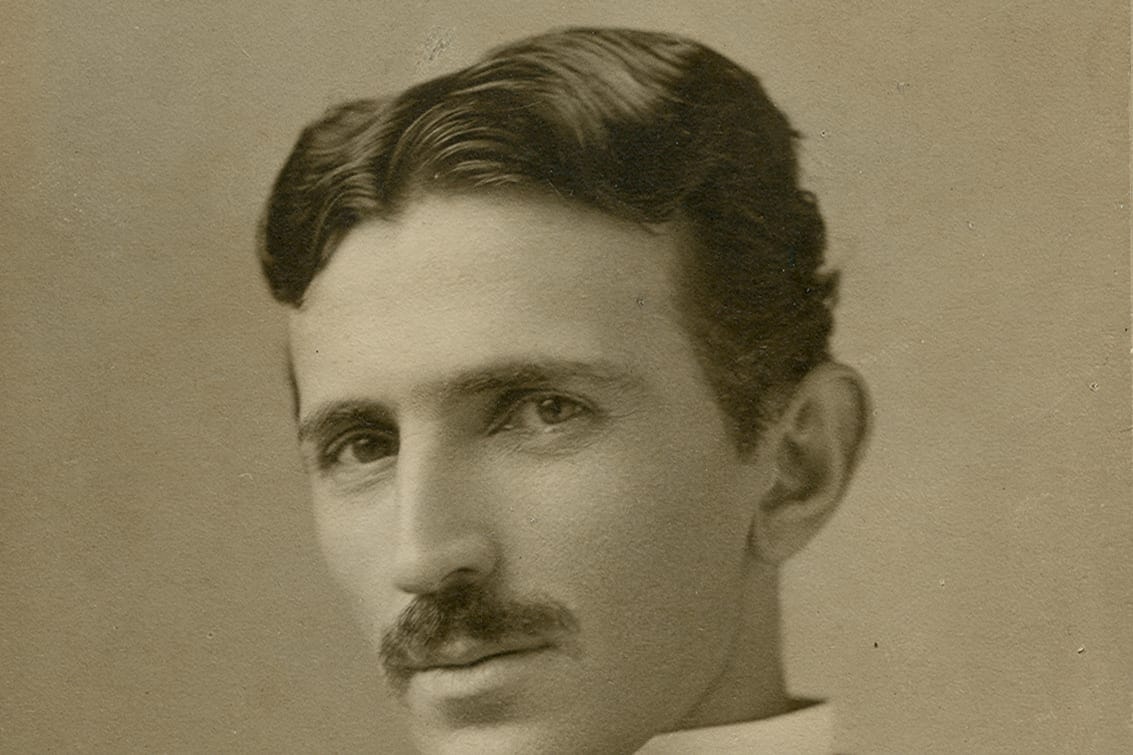
Alan Turing, the British mathematician who helped break German codes in the Second World War and laid the foundations of computer science, made the most famous prediction in the history of AI. In October 1950, in a paper called Computing Machinery and Intelligence, he replaced the vague question “Can machines think?” with a test he called the imitation game, now known as the Turing test: can a machine hold a text conversation well enough that a person cannot reliably tell it from a human?
“I believe that in about fifty years’ time it will be possible to programme computers… to make them play the imitation game so well that an average interrogator will not have more than 70 per cent chance of making the right identification after five minutes of questioning.” Alan Turing, 1950
He went further a year later. In a 1951 lecture in Manchester, he said that “once the machine thinking method had started, it would not take long to outstrip our feeble powers,” and that “at some stage therefore we should have to expect the machines to take control,” according to Quote Investigator.
Turing was pointing back to an even older warning. The novelist Samuel Butler had imagined the same thing in Erewhon, his 1872 satire, in which a chapter called “The Book of the Machines” describes machines evolving like living things until they surpass the people who made them, according to Wikipedia. The citizens of Butler’s imaginary country respond by destroying their machines. More than 150 years later, the question Butler raised as a joke, whether machines could evolve beyond their makers, is debated seriously by the people who build them.
How did he do? His date was about 25 years early: computers in 2000 could not pass his test. But his direction was right, and his specific test has now been passed. In March 2025, researchers at the University of California San Diego ran a randomized, three-party Turing test with five-minute conversations, the same length Turing proposed. GPT-4.5, prompted to adopt a persona, was judged to be the human 73 percent of the time, more often than the real humans it was compared with, according to Jones and Bergen.
What did the founders of AI predict in 1956?
The field got its name in a funding proposal. In August 1955, John McCarthy, Marvin Minsky, Nathaniel Rochester and Claude Shannon proposed a summer workshop at Dartmouth College, held in 1956. Their proposal stated the field’s founding belief:
“Every aspect of learning or any other feature of intelligence can in principle be so precisely described that a machine can be made to simulate it.” Dartmouth proposal, August 1955
They were also optimistic about speed. They wrote that “a significant advance can be made in one or more of these problems if a carefully selected group of scientists work on it together for a summer.” It took about 70 years.
The early pioneers kept giving short timelines. According to Wikipedia’s history of AI, Herbert Simon and Allen Newell predicted in 1958 that “within ten years a digital computer will be the world’s chess champion.” It took 39 years, until Deep Blue in 1997. In 1965 Simon wrote that “machines will be capable, within twenty years, of doing any work a man can do,” as Quote Investigator documents. And in 1970 Life magazine quoted Marvin Minsky saying: “In from three to eight years we will have a machine with the general intelligence of an average human being.”
These predictions failed so badly that they damaged the field. In 1973, a report for the British government by the mathematician James Lighthill criticized AI’s failure to achieve its “grandiose objectives,” and funding was cut in Britain and the United States. The period of disappointment and shrinking budgets that followed became known as the first AI winter. A second came in the late 1980s, when a boom in rule-based “expert systems” collapsed. For decades afterward, predicting human-level AI was a reliable way to lose credibility.
What did I. J. Good mean by the “last invention”?
In 1965, the same year Simon made his twenty-year prediction, a British mathematician named Irving John Good wrote a few sentences that are now quoted in almost every serious discussion of AI risk. Good had worked as a codebreaker at Bletchley Park and was a friend of Alan Turing. In a paper called “Speculations Concerning the First Ultraintelligent Machine,” he wrote, according to Quote Investigator:
“Thus the first ultraintelligent machine is the last invention that man need ever make, provided that the machine is docile enough to tell us how to keep it under control.” I. J. Good, 1965
His reasoning was simple and powerful. A machine that is better than humans at every intellectual task would also be better at designing machines. It could design an even better machine, which could design a better one still, an “intelligence explosion” that would leave human intelligence far behind. Every major idea in today’s debate, from “superintelligence” to the “control problem,” is already in those sentences, including the crucial condition: “provided that the machine is docile enough.”
Good’s prediction has not been tested yet, because no machine is better than humans at everything. But it is the idea that Elon Musk, Sam Altman and Dario Amodei are all, in different ways, responding to. You can read their answers in our articles on Musk, Altman and Amodei.
Who predicted the internet and the smartphone?
Today’s AI would be impossible without the internet, the data it produces and the phones that connect billions of people to it. Several people saw that world coming with striking accuracy.
In April 1965, Gordon Moore, who later co-founded Intel, published an article in Electronics magazine predicting that the number of components on a chip would keep doubling. In the same article he wrote that integrated circuits “will lead to such wonders as home computers, or at least terminals connected to a central computer, automatic controls for automobiles, and personal portable communications equipment,” according to the original article. That is the personal computer, the self-driving car and the smartphone, described in a single sentence 60 years ago.
A year earlier, in 1964, the science-fiction writer Arthur C. Clarke appeared on the BBC programme Horizon and described a world in which “we can be in instant contact wherever we may be,” according to Open Culture. Then he made a prediction that came true almost to the year:
“It will be possible in that age, possibly 50 years from now, for a man to conduct his business from Tahiti or Bali just as well as he could from London.” Arthur C. Clarke, 1964
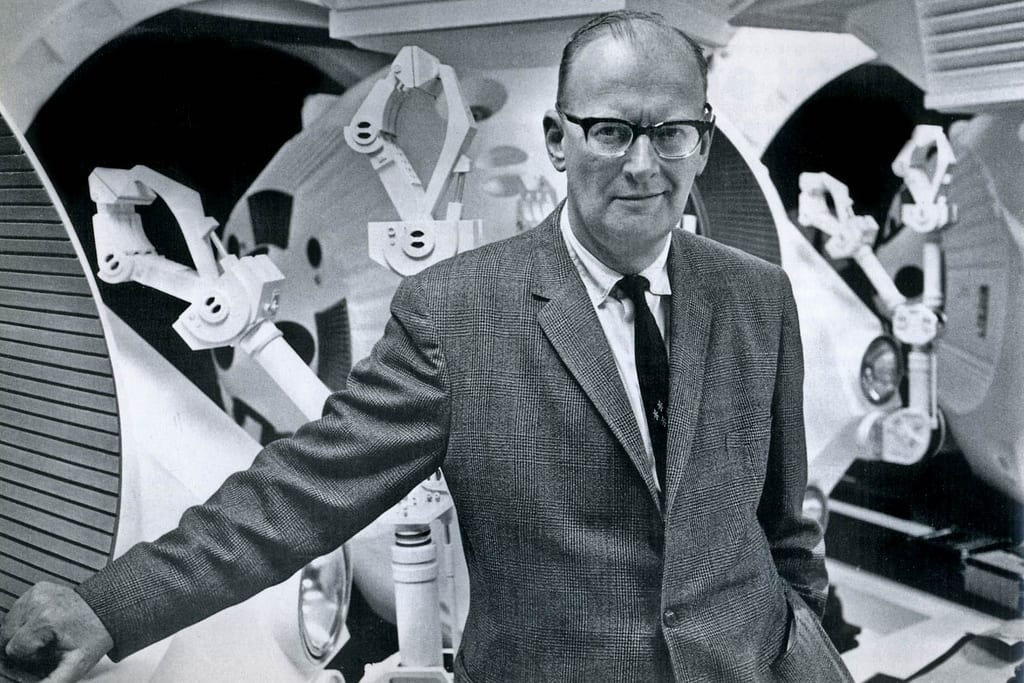
Fifty years after 1964 is 2014, and by the early 2020s, remote work from anywhere had become ordinary for millions of people. By 1995 the business world was catching up: Bill Gates told Microsoft’s executives that the internet was “the most important single development to come along since the IBM PC,” according to the Computer History Museum. The same year, Clifford Stoll wrote in Newsweek that “no online database will replace your daily newspaper,” as The Hustle recounts. Both men were experts. Only one was right.
Who predicted the singularity?
In March 1993, Vernor Vinge, a computer science professor at San Diego State University and an award-winning science-fiction author, presented a paper called The Coming Technological Singularity at a symposium sponsored by NASA. Its first lines were among the boldest predictions of the century:
“Within thirty years, we will have the technological means to create superhuman intelligence. Shortly after, the human era will be ended.” Vernor Vinge, 1993
Vinge was specific about his window: he would “be surprised if this event occurs before 2005 or after 2030.” He also described four ways it could happen: computers that become “awake” and superhumanly intelligent; large computer networks and their users waking up as one superhuman entity; interfaces between people and computers so close that users become superhumanly intelligent; and biological improvements to human intelligence. The first two look strikingly like today’s large models trained on the content of the whole internet.
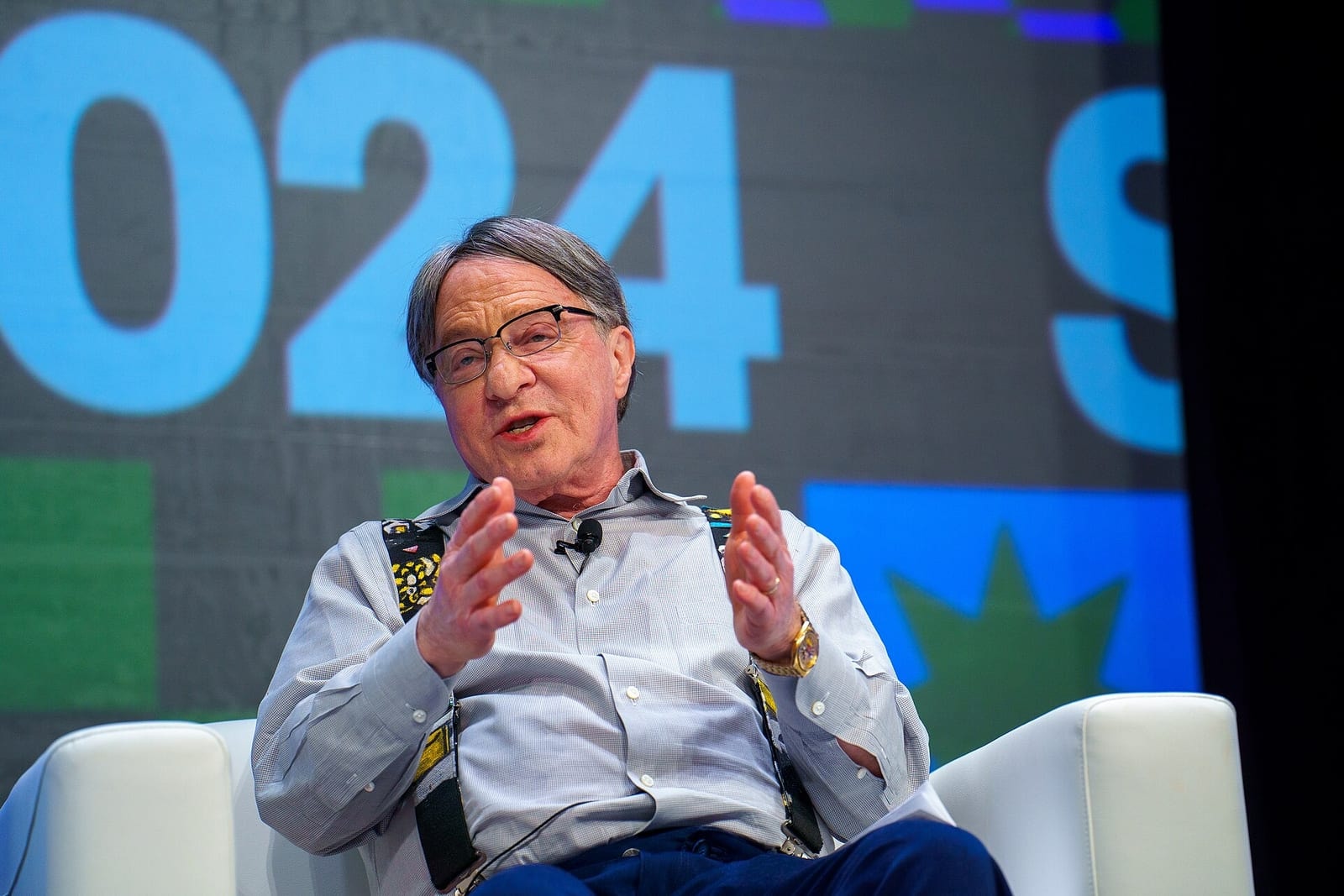
The person who made the singularity famous was Ray Kurzweil, an inventor who pioneered optical character recognition and speech synthesis. Since 1999 he has predicted that AI will reach human-level intelligence by 2029, and in The Singularity Is Near (2005) he set the date for humans merging with machines at 2045. In June 2024 he published The Singularity Is Nearer, which, according to Wikipedia, reiterates both dates: human-level AI by 2029 and the singularity, as he calls it, by 2045.
For most of the past 25 years, Kurzweil’s 2029 was treated as wildly optimistic. In 2026, with AI systems passing the Turing test in controlled experiments and the heads of major labs talking about powerful AI within a few years, it looks less like an outlier and more like a careful extrapolation of computing trends, which is exactly how he always described it.
How many people believed them?
This is the most revealing part of the story. For most of the last 70 years, the people who predicted human-level AI soon were a small and often mocked minority. Even the Dartmouth proposal asked for “a 2 month, 10 man study.” The neural network approach that powers today’s AI was kept alive for decades by an even smaller group. When the ACM gave its 2018 Turing Award to Yoshua Bengio, Geoffrey Hinton and Yann LeCun, it noted that by the early 2000s they were among a small group still committed to the approach, and that their efforts to revive interest in neural networks were initially met with skepticism, according to the ACM.
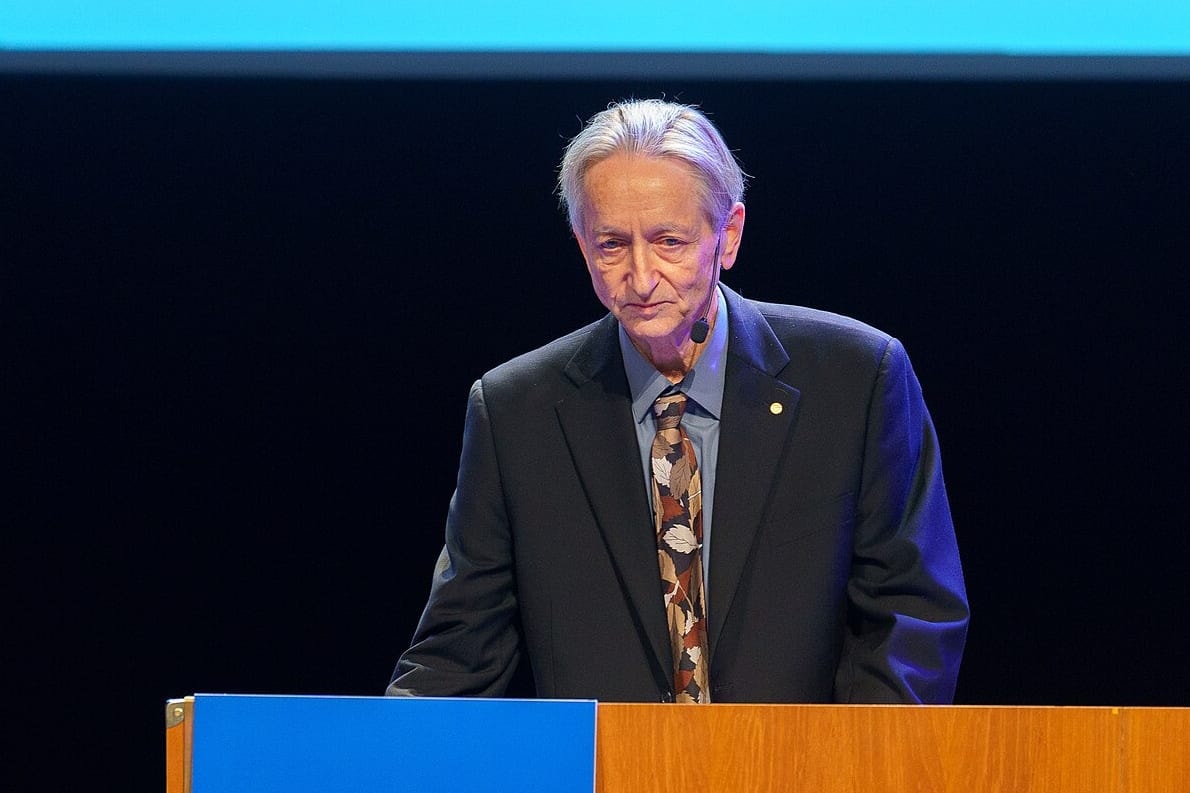
Even Geoffrey Hinton, the most important of those believers, did not expect this speed. When he left Google in May 2023, he told The New York Times, as quoted by BGR:
“The idea that this stuff could actually get smarter than people — a few people believed that. But most people thought it was way off. And I thought it was way off. I thought it was 30 to 50 years or even longer away. Obviously, I no longer think that.” Geoffrey Hinton, May 2023
Surveys of AI researchers show how fast expert opinion has moved. In a survey published in 2017, researchers estimated a 50 percent chance of AI outperforming humans in all tasks within 45 years, which points to about 2061, according to Grace and colleagues. In the 2023 edition, which asked 2,778 researchers who had published in top AI venues, the 50 percent date for machines outperforming humans in every possible task had moved to 2047, thirteen years earlier than in the 2022 survey, and respondents gave a 10 percent chance as early as 2027, according to the 2023 survey.
The researchers were much more cautious about jobs. In the same 2023 survey they put a 50 percent chance of all occupations becoming fully automatable at 2116, though that, too, was 48 years earlier than the answer to the same question in 2022. In other words, experts now expect machines that can do almost any task long before they expect society to hand all work over to them.
| Survey | Who was asked | Median forecast for AI better than humans at all tasks |
|---|---|---|
| 2016, published 2017 | Machine learning researchers | About 45 years away, around 2061 |
| 2022 | AI researchers | Around 2060 |
| 2023 | 2,778 published AI researchers | 2047, with a 10 percent chance by 2027 |
| Ray Kurzweil, since 1999 | One inventor | 2029 |
The gap between experts and the public is also striking. In 2024 surveys published by the Pew Research Center in April 2025, 56 percent of AI experts said AI would have a positive impact on the United States over the next 20 years, compared with only 17 percent of American adults. Similar shares of both groups, more than half, wanted more control over how AI is used in their lives.
So the honest answer to “how many believed them?” is: very few, for a very long time. Belief moved from a handful of researchers and science-fiction writers before 2012, to a growing minority of researchers after deep learning took off, to a large share of the field after ChatGPT. Today the question is no longer whether powerful AI is coming, but when, and whether we can keep it under control. For the first time, many of the people building AI say openly that they are worried about it.
Who doubted the AI era, and why?
The doubters were not foolish. They were usually experts reacting to real failures. After the overconfident forecasts of the 1960s, the Lighthill report and two AI winters taught a generation of researchers to be careful, and philosophers argued that computers manipulating symbols could never truly understand anything. In the 1970s the philosopher Hubert Dreyfus argued that human intelligence depends on intuition and experience that written rules cannot capture. In a sense he was right about rule-based AI, which is exactly the approach that failed. In business, skeptics such as Clifford Stoll on the web and Steve Ballmer on the iPhone were reasoning from how things worked at the time.
The lesson is not that doubters are always wrong. On timing, they were often right: human-level AI did not arrive in the 1970s or the 1980s, as the optimists promised. The lesson is that both sides tended to reason in straight lines, while the technology grew on curves. The optimists assumed that a working demonstration meant the rest was near. The skeptics assumed that because progress had been slow, it would stay slow. Both underestimated how much the steady, exponential growth in computing power, data and investment would eventually change.
The scorecard: who was right?
This table is our judgment, based on the record above.
| Who | Year | Prediction | Our verdict |
|---|---|---|---|
| Ada Lovelace | 1843 | A machine might compose music | Right: AI composes music today |
| Nikola Tesla | 1926 | A pocket device connected to a global “brain” | Right in direction: the smartphone and the internet |
| Alan Turing | 1950 | Machines would pass his imitation game in about 50 years | About 25 years late, then passed in 2025 |
| Dartmouth founders | 1955 | A significant advance in one summer | Wrong on timing by decades |
| Herbert Simon | 1965 | Machines doing any work a man can do within 20 years | Wrong by decades so far |
| I. J. Good | 1965 | The first ultraintelligent machine is the last invention, if we can control it | Untested, and central to today’s debate |
| Gordon Moore | 1965 | Home computers and personal portable communications | Right |
| Arthur C. Clarke | 1964 | Business from Tahiti or Bali within 50 years | Right, almost to the year |
| Marvin Minsky | 1970 | Average human intelligence in three to eight years | Wrong by decades |
| Clifford Stoll | 1995 | The web will not replace newspapers | Wrong |
| Bill Gates | 1995 | The internet is the most important development since the PC | Right |
| Vernor Vinge | 1993 | Superhuman intelligence within 30 years | Not reached, but far closer than critics expected |
| Ray Kurzweil | 1999 | Human-level AI by 2029 | Open, and no longer considered far-fetched |
Why were the visionaries right about direction but wrong about dates?
Three reasons explain most of the misses.
- They underestimated how much computing power intelligence needs. The pioneers of the 1950s thought intelligence was mainly a matter of clever rules. It turned out to require learning from enormous amounts of data on enormous computers. The computer scientist Rich Sutton called this “the bitter lesson” in a 2019 essay: in the long run, general methods that use more computation beat clever human-designed shortcuts.
- Exponential growth is hard to feel. Moore’s doubling sounds modest year by year, but it compounds into millions of times more power over decades. Predictions made in the early, slow part of the curve tend to be too pessimistic about the long run and too optimistic about the next few years.
- Deployment is slower than invention. Even when something works in a laboratory, it takes years to become cheap, reliable and part of daily life. Turing’s test was passed in 2025, but businesses are still learning how to use the systems that passed it.
The people who did best, such as Clarke, Moore and Kurzweil, thought in curves rather than straight lines, and tied their forecasts to measurable trends in computing and communications rather than to a single breakthrough.
Our view
This section is opinion: the view of the Adams Analytics editorial team.
The AI era was predicted, but it was not inevitable. It needed the internet, cheap chips, huge amounts of data, a new design called the Transformer and tens of billions of dollars of investment. The visionaries saw the destination; it took millions of people to build the road.
Being early is not the same as being wrong. Vinge’s 30 years and Kurzweil’s 2029 were mocked for decades. They may still turn out to be early by a few years, but they were much closer to the truth than the experts who laughed at them.
The most valuable predictions came with conditions. I. J. Good’s line is remembered because of its last clause: the machine helps us only if it is “docile enough to tell us how to keep it under control.” That condition, not the date, is the part of the prediction that matters most now.
Science fiction did real work. Clarke, Vinge and others gave engineers, investors and the public a vocabulary for what was coming, years before the technology existed. Many of the people building AI today read them, and their questions about control and purpose shaped the field’s debates long before any machine could hold a conversation.
Today’s forecasts deserve the same humility. The founders of AI companies now give dates of one to six years for powerful AI. History suggests they are probably right about the direction and uncertain about the timing, which is exactly how this article’s visionaries turned out.
What this history means for businesses and marketers in Egypt and the Gulf
You do not need to predict the future precisely to benefit from it. You need to follow the direction and test cheaply as it arrives:
- Bet on direction, hedge on timing. Assume AI will keep getting cheaper and more capable, but do not stake your business on a specific date for a specific capability.
- Watch the curves, not the headlines. Costs per task, adoption by your customers, and your own results are better guides than announcements.
- Run small experiments early. The businesses that gained most from the web, the smartphone and social media were the ones that tried them early, on a small scale, and measured what happened.
- Keep the human advantages. Judgment, trust and understanding of local markets, from Cairo to Riyadh, are exactly what machines are slowest to replace.
Measuring honestly is where Adams Analytics helps. It turns your Meta ad accounts into clear reports in English and Arabic, so you can see what works as AI changes the platforms you advertise on. Our guide to comparing two periods in Meta ads shows how to tell real progress from noise.
Key takeaways
- The AI era was predicted: by Ada Lovelace (1843), Nikola Tesla (1926), Alan Turing (1950), I. J. Good (1965), Gordon Moore (1965), Arthur C. Clarke (1964), Vernor Vinge (1993) and Ray Kurzweil (1999), among others.
- Turing predicted machines would pass his conversation test in about 50 years; a 2025 study found GPT-4.5 was judged human 73 percent of the time in five-minute chats.
- The founders of AI were far too optimistic about timing; Simon and Minsky missed by decades, and two AI winters followed.
- Vinge predicted superhuman intelligence within 30 years of 1993; Kurzweil has predicted human-level AI by 2029 since 1999 and restated it in 2024.
- Few believed them. In a survey published in 2017, the median AI researcher put human-level AI about 45 years away; by 2023 the median date had moved to 2047, and Hinton said in 2023 he had thought it was 30 to 50 years away.
- The visionaries were usually right about direction and wrong about dates, because they underestimated how much computing power intelligence needs and how slowly new technology spreads.
- For businesses, the lesson is to bet on direction, hedge on timing, experiment early and measure everything.
For the full history of the technology itself, read how technology evolved from 1990 to 2026.
Questions
Did anyone predict artificial intelligence before it existed?
Yes. Ada Lovelace imagined in 1843 that a computing machine might compose music, Alan Turing predicted in 1950 that machines would hold convincing conversations, and I. J. Good described an intelligence explosion in 1965. Vernor Vinge and Ray Kurzweil later put dates on superhuman and human-level AI.
What did Alan Turing predict about AI?
In 1950 he predicted that in about fifty years computers would play his imitation game so well that an average interrogator would have no more than a 70 percent chance of identifying them after five minutes. His date was early, but in 2025 GPT-4.5 was judged to be human 73 percent of the time in such a test.
Who predicted the technological singularity?
The mathematician I. J. Good described an intelligence explosion in 1965. Vernor Vinge popularized the term in 1993, predicting superhuman intelligence within thirty years. Ray Kurzweil made it famous, predicting human-level AI by 2029 and the singularity by 2045.
What did Ray Kurzweil predict?
Since 1999 Kurzweil has predicted that AI will reach human-level intelligence by 2029. In The Singularity Is Near (2005) he set 2045 for humans merging with machines, and in The Singularity Is Nearer (2024) he restated both dates.
How many people believed AI would arrive this soon?
Very few, for a long time. In a survey published in 2017, AI researchers put a 50 percent chance of AI beating humans at all tasks about 45 years away. By the 2023 survey of 2,778 researchers that date had moved to 2047, and Geoffrey Hinton said he had thought it was 30 to 50 years away until 2023.
Who predicted the smartphone?
Nikola Tesla said in 1926 that a person would carry a wireless device in a vest pocket, and Gordon Moore wrote in 1965 that integrated circuits would lead to personal portable communications equipment. Arthur C. Clarke predicted in 1964 that people would work from anywhere within 50 years.
Why were early AI predictions so wrong about timing?
Early pioneers thought intelligence was mainly clever rules and underestimated how much data and computing power it needs. They also underestimated how slowly new technology spreads from the lab to daily life. The overconfidence led to two AI winters.
What can businesses learn from past AI predictions?
Visionaries were usually right about direction and wrong about dates. Businesses should assume AI will keep getting cheaper and more capable, avoid betting on a specific date, run small experiments early and measure their own results.
Sources
- Ada Lovelace — Notes on Menabrea’s Sketch of the Analytical Engine (1843), Fourmilab edition
- Snopes — Did Nikola Tesla describe cell phones in 1926?
- Alan Turing — Computing Machinery and Intelligence, Mind (October 1950)
- Quote Investigator — Once the machine thinking method had started, it would not take long to outstrip our feeble powers (Turing, 1951)
- Wikipedia — Erewhon (Samuel Butler, 1872)
- McCarthy, Minsky, Rochester and Shannon — A Proposal for the Dartmouth Summer Research Project on Artificial Intelligence (August 1955)
- Quote Investigator — Machines will be capable, within twenty years, of doing any work that a man can do (Simon, 1965)
- Wikipedia — History of artificial intelligence
- Quote Investigator — The first ultraintelligent machine is the last invention that humanity need ever make (Good, 1965)
- Gordon Moore — Cramming more components onto integrated circuits, Electronics (April 1965)
- Open Culture — In 1964, Arthur C. Clarke predicts the internet, 3D printers and trained monkey servants
- Computer History Museum — This day in history, May 26: Gates’s “Internet Tidal Wave” memo (1995)
- The Hustle — In 1995, Newsweek predicted the internet would fail
- Vernor Vinge — The Coming Technological Singularity: How to Survive in the Post-Human Era (1993)
- Wikipedia — The Singularity Is Nearer (Ray Kurzweil, 2024)
- Wikipedia — AI winter
- ACM — Fathers of the deep learning revolution receive the 2018 ACM A.M. Turing Award (March 2019)
- BGR — “Godfather of AI” quits Google to warn us of the dangers (May 2023), quoting The New York Times
- Grace and others — When Will AI Exceed Human Performance? Evidence from AI Experts, arXiv (May 2017)
- Grace and others — Thousands of AI Authors on the Future of AI, arXiv (January 2024)
- Jones and Bergen — Large Language Models Pass the Turing Test, arXiv (March 2025)
- Pew Research Center — How the U.S. public and AI experts view artificial intelligence (April 2025)
Send your next client report in minutes
Adams Analytics connects to your Meta ad accounts and builds branded PDF reports in English or Arabic. Free for 7 days — no credit card.
Start free trialWritten by the Adams Analytics team and checked against Meta’s documentation and our own product. Spotted something out of date? Tell us at support@buildincairo.com.